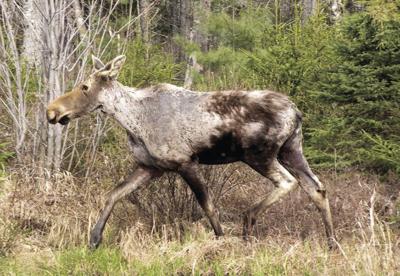
This adult moose shows the hair loss associated with high loads of winter ticks. The increased frequency of ticks in northern New England is linked to climate change. (DAN BERGERON PHOTO)
This adult moose shows the hair loss associated with high loads of winter ticks. The increased frequency of ticks in northern New England is linked to climate change. (DAN BERGERON PHOTO)
DURHAM — As winter in New England seems to get warmer, fall lingers longer and spring comes into bloom earlier, areas like northern New Hampshire and western Maine are seeing an unusual continued increase in winter ticks, which are endangering the moose population.
Researchers at the University of New Hampshire have found that the swell of infestations of this parasite, which attaches itself to moose during the fall and feeds throughout the winter, is the primary cause of an unprecedented 70 percent death rate of calves over a three-year period.
Keep it Clean. Please avoid obscene, vulgar, lewd,
racist or sexually-oriented language. PLEASE TURN OFF YOUR CAPS LOCK. Don't Threaten. Threats of harming another
person will not be tolerated. Be Truthful. Don't knowingly lie about anyone
or anything. Be Nice. No racism, sexism or any sort of -ism
that is degrading to another person. Be Proactive. Use the 'Report' link on
each comment to let us know of abusive posts. Share with Us. We'd love to hear eyewitness
accounts, the history behind an article.







(0) comments
Welcome to the discussion.
Log In
Keep it Clean. Please avoid obscene, vulgar, lewd, racist or sexually-oriented language.
PLEASE TURN OFF YOUR CAPS LOCK.
Don't Threaten. Threats of harming another person will not be tolerated.
Be Truthful. Don't knowingly lie about anyone or anything.
Be Nice. No racism, sexism or any sort of -ism that is degrading to another person.
Be Proactive. Use the 'Report' link on each comment to let us know of abusive posts.
Share with Us. We'd love to hear eyewitness accounts, the history behind an article.