




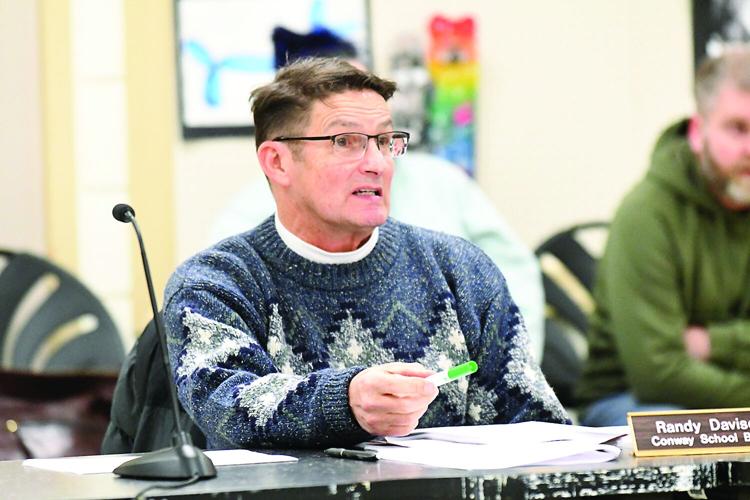
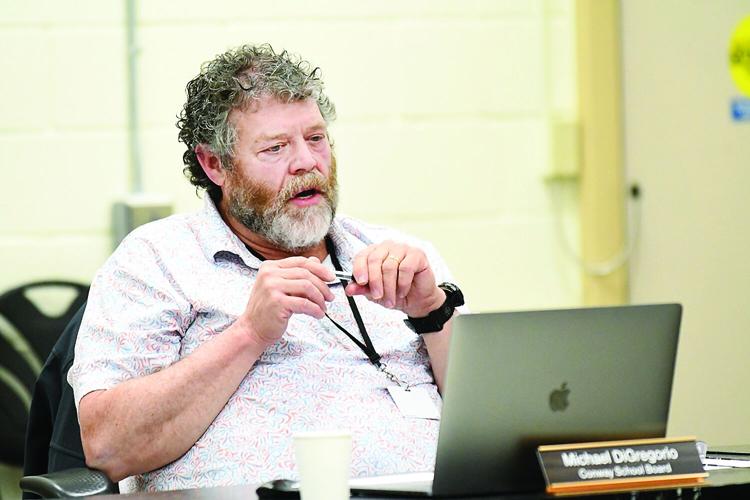

CONWAY — Freedom and Madison’s school boards will not negotiate a long-term tuition contract with the Conway School Board as long as Randy Davison remains on its negotiating team, they say, and both boards wrote to Conway asking to negotiate with someone other than him.
Davison, Conway’s longest-serving board member, contends he has done nothing wrong, “other than trying to look out for Conway’s best interests.”
kAms2G:D@?[ |:<6 s:vC68@C:@ 2?5 #J2? (2==246 D6CG6 2D r@?H2J’D EF:E:@? ?68@E:2E:?8 E62>] %96 EC:@ 92D 2=C625J 3C@<6C65 9:89 D49@@= 28C66>6?ED H:E9 p=32?J[ q2CE=6EE[ t2E@? 2?5 y24<D@?[ H9:49 H6C6 2AAC@G65 =2DE >@?E9 2E E9@D6 E@H?D’ 2??F2= D49@@= 5:DEC:4E >66E:?8D]k^Am
kAmqFE uC665@>[ |25:D@? 2?5 %2>H@CE9[ H9:49 2C6 :? $p& `b[ 36=:6G6 E96J 92G6 2?@E96C J62C E@ 7:?2=:K6 2? 28C66>6?E 367@C6 E96 a_\J62C 4@?EC24E 6IA:C6D :? yF?6 a_af 2?5 5:5 ?@E 3C:?8 EF:E:@? 2CE:4=6D E@ E96:C G@E6CD]k^Am
kAm%96 7F?5:?8 7@C>F=2 :D 32D65 @? bd A6C46?E @7 E96 E@H?’D 6BF2=:K65 G2=F6 2?5 ed A6C46?E @7 E96 E@H?’D 2G6C286 52:=J 2EE6?52?46 2E E96 9:89 D49@@=j 3FE E96 ?6H 28C66>6?E :D 32D65 D@=6=J @? 2 E@H?’D 2G6C286 52:=J >6>36CD9:A]k^Am
kAm%96 E62>D 7@C r@?H2J 2?5 |25:D@? >6E pAC:= `[ 2?5 E96 ?6IE 52J[ H9:=6 2AA62C:?8 @? $&}\%'[ s:vC68@C:@ D92C65 D@>6 “3C62<:?8 ?6HD]”k^Am
kAm“%96 C62=:EJ :D E92E uC665@> 5@6D?’E H2?E E@ 36 2E E96 E23=6 H:E9 #2?5J s2G:5D@? 2?J =@?86C[” s:vC68@C:@ D2:5]k^Am
kAmw6 25565i “p?5 %2>H@CE9 92D D2:5 E96J H@?’E >66E H:E9 FD F?E:= 27E6C E96:C C6@C82?:K2E:@? 3642FD6 E96J 2C6 H2:E:?8 E@ D66 H92E 92AA6?D :? @FC 6=64E:@? WpAC:= `cX]k^Am
kAm~? |@?52J[ s2G:D@? D2:5 96 5:D4@G6C65 E92E E96 v@G6C?@C (6?EH@CE9 $49@@= q@2C5 @? u63] a G@E65 f\_ E@ 8C2?E A6C>:DD:@? 7@C qC@5:6 s6D92:6D[ sC] t=:K236E9 $964<=6C[ $FA6C:?E6?56?E r2C@=:?6 pC2<6=:2?[ 2?5 qFD:?6DD p5>:?:DEC2E@C z2E9J ~’q=6?6D “E@ >66E H:E9 E96 E@H?D @7 uC665@> 2?5 |25:D@? E@ 5C27E 2 EF:E:@? 28C66>6?E 7@C DEF56?E 6?C@==>6?E]”k^Am
kAms2G:D@? D2:5 96 3C@F89E FA E96 u63] a >:?FE6D H:E9 E96 |25:D@? ?68@E:2E@CD @? pAC:= `] “x 2D<65 E96> :7 E9:D H2D D@>6H92E @7 2? pAC:= u@@=’D[” s2G:D@? D2:5]k^Am
kAmw6 25565i “x BF6DE:@? H96E96C W|25:D@?X H2D ?68@E:2E:?8 :? 8@@5 72:E9] ]]] ~FC ;@3 :D E@ >2<6 2 72:C 4@?EC24E 2?5 32C82:? :? 8@@5 72:E9] %96J 42? 36 FAD6E H:E9 >6[ 3FE H6’C6 ?68@E:2E:?8 7@C r@?H2J 2?5 ?@E E96 @E96C D49@@= 5:DEC:4ED] x7 A6@A=6 4@>6 96C6[ x H2?E E96> E@ A2J E96:C 72:C D92C6] … x’> 8@:?8 E@ 42== :E 2D x D66 :E] %96J E9@F89E x H2D 36:?8 CF56] x E9@F89E E96J H6C6 36:?8 CF56] x E9@F89E W?68@E:2E:?8X H:E9 z:?8DH@@5 H2D 2 D=2A :? E96 7246]”k^Am
kAmz:?8DH@@5 #68:@?2= w:89 $49@@= :? (@=763@C@ :D A2CE @7 E96 v@G6C?@C (6?EH@CE9 D49@@= 5:DEC:4E] s2G:D@? :D 2 DA64:2= 65F42E:@? E62496C E96C6]k^Am
kAm$p& `b $FA6C:?E6?56?E |:4926= (92=2?5 2?5 |25:D@? $49@@= q@2C5 r92:C y:> rFCC2? 4@?7:C>65 %F6D52J E96J H6C6 D6?5:?8 2 =6EE6C E@ E96 r@?H2J 3@2C5 2D<:?8 E92E s2G:D@? 36 C6A=2465 :? ?68@E:2E:@?D]k^Am
kAm“x 92G6 366? 2FE9@C:K65 3J E96 |25:D@? 3@2C5 E@ HC:E6 E@ E96 r@?H2J ?68@E:2E:?8 4@>>:EE66 23@FE D@>6 @7 E96 3692G:@C @7 2? :?5:G:5F2=[ H9@ 92D 366? :?9:3:E:?8 E96 23:=:EJ E@ ?68@E:2E6[” (92=2?5 D2:5 3J A9@?6 %F6D52J]k^Am
kAmw6 25565i “p== H6 2C6 =@@<:?8 7@C :D A@D:E:G6 5:2=@8F6[ 2?5 F?7@CEF?2E6=J[ H6 2C6 ?@E 23=6 E@ 5@ E92E H:E9 E9:D :?5:G:5F2= :?G@=G65]”k^Am
kAmx? E96 =6EE6C[ @3E2:?65[ 3J E96 $F? @? (65?6D52J[ rFCC2? 2?5 76==@H |25:D@? $49@@= q@2C5 >6>36C r96C: $E24<A@=6[ H9@ D6CG6D @? E96 ?68@E:2E:?8 E62>[ 2?5 (92=2?5 HC:E6i “(6 2C6 HC:E:?8 @? 3692=7 @7 E96 |25:D@? $49@@= q@2C5 E@ 7@C>2==J 6IAC6DD 4@?46C?D C682C5:?8 E96 4@?5F4E @7 r@?H2J $49@@= q@2C5 |6>36C 2?5 w:89 $49@@= }68@E:2E@C[ |C] #2?5J s2G:D@?[ 5FC:?8 E96 @?8@:?8 9:89 D49@@= EF:E:@? ?68@E:2E:@?D]k^Am
kAm“%9C@F89@FE E96 ?68@E:2E:@? AC@46DD[ |C] s2G:D@?’D 3692G:@C 92D[ 2E E:>6D[ 366? 4@>32E:G6[ 5:D4@FCE6@FD[ 2?5 :?4@?D:DE6?E H:E9 E96 6IA64E2E:@?D @7 2 AC@76DD:@?2= 2?5 8@@5 72:E9 ?68@E:2E:@? 6?G:C@?>6?E] p55:E:@?2==J[ E96C6 92G6 366? 4@?46C?D C2:D65 C682C5:?8 2 =24< @7 C6DA64E 7@C E96 4@?7:56?E:2=:EJ E92E :D 6DD6?E:2= E@ AC@5F4E:G6 5:D4FDD:@?D]k^Am
kAm“(6 H2?E E@ 36 4=62C E92E H6 5@ ?@E G:6H |C] s2G:D@? 2D C6AC6D6?E2E:G6 @7 E96 6?E:C6 r@?H2J $49@@= q@2C5 @C :ED ?68@E:2E:?8 E62>] w@H6G6C[ 9:D 4@?5F4E 92D 364@>6 2 D:8?:7:42?E 5:DEC24E:@? 2?5 92D :>A6565 AC@8C6DD E@H2C5 C6249:?8 2 72:C 2?5 6BF:E23=6 28C66>6?E]”k^Am
kAm%96J 255i “%96 |25:D@? $49@@= q@2C5 C6>2:?D 4@>>:EE65 E@ H@C<:?8 :? A2CE?6CD9:A H:E9 r@?H2J E@ C6249 2? 28C66>6?E E92E DFAA@CED DEC@?8 65F42E:@?2= @FE4@>6D 2?5 =@?8 E6C> 7:?2?4:2= DFDE2:?23:=:EJ 7@C 3@E9 5:DEC:4ED] (6 2C6 9@A67F= E92E[ H:E9 2 C6?6H65 7@4FD @? AC@76DD:@?2=:D> 2?5 >FEF2= C6DA64E[ H6 42? 4@?E:?F6 E96D6 5:D4FDD:@?D AC@5F4E:G6=J]”k^Am
kAm$2C29 vC@=62F[ 492:C @7 E96 uC665@> 3@2C5[ D6?E 2 =6EE6C E@ r@?H2J 6IAC6DD:?8 D:>:=2C 4@?46C?D 23@FE s2G:D@?] %96 =6EE6C[ H9:49 E96 $F? @3E2:?65 @? %F6D52J[ H2D D6?E @? s64] `a]k^Am
kAm“x 2> HC:E:?8 @? 3692=7 @7 E96 uC665@> $49@@= q@2C5 C682C5:?8 4@>>6?ED >256 3J r@?H2J ?68@E:2E:?8 4@>>:EE66 >6>36C 2?5 r@?H2J $49@@= q@2C5 >6>36C #2?5J s2G:D@?[” vC@=62F HC@E6] “pD C6A@CE65 :? %96 r@?H2J s2:=J $F? 2CE:4=6[ ‘r=@4< :D E:4<:?8 @? EF:E:@? ?68@E:2E:@?D’ Ws64] dX[ |C] s2G:D:@? H2D BF@E65 2D D2J:?8i ‘|J E2<6 @? :E :D E92E E96 EH@ D>2==6DE E@H?D WuC665@> 2?5 y24<D@?X E92E D6?5 FD E96 =62DE 2>@F?E @7 DEF56?ED 92G6 96=5 r@?H2J 9@DE286]’”k^Am
kAmvC@=62F 4@?E:?F65i “%96 D49@@= 3@2C5 36=:6G6D E92E E96D6 DE2E6>6?ED C67=64E 2 =24< @7 8@@5\72:E9 32C82:?:?8 2?5 4@?DE:EFE6 2 3C6249 @7 E96 28C665\FA@? 6IA64E2E:@?D C682C5:?8 ?@?\AF3=:4 D6DD:@? 5:D4FDD:@?D]”k^Am
kAm$96 25565i “p44@C5:?8=J[ E96 uC665@> $49@@= q@2C5 C6BF6DED E92E |C] s2G:D@? 36 C6>@G65 7C@> E96 r@?H2J ?68@E:2E:?8 E62>] %96 3@2C5 92D G@E65 2?5 H:== ?@E 4@?E:?F6 ?68@E:2E:@?D H:E9 |C] s2G:D@? 2D 2 >6>36C @7 E96 4@>>:EE66] (6 C6>2:? 4@>>:EE65 E@ AC@5F4E:G6 2?5 C6DA64E7F= ?68@E:2E:@?D 2?5 9@A6 E92E E9:D 24E:@? H:== 2==@H 2== A2CE:6D E@ AC@4665 :? 8@@5 72:E9]”k^Am
kAms:vC68@C:@ 4@?E6?5D E92E s2G:D@? :D 6?4@FC28:?8 E96 D@FE96C? E@H?D E@ D6?5 E96:C DEF56?ED E@ z:?8DH@@5] s2G:D@? D2JD E92E’D ?@E ECF6]k^Am
kAm“w6’D D@=:4:E:?8 E96 D@FE96C? E@H?D E@ 8@ E@ z:?8DH@@5[” s:vC68@C:@ D2:5 3J A9@?6 @? %F6D52J 27E6C?@@?]k^Am
kAm“xE’D @FEC286@FD E92E 2 r@?H2J $49@@= q@2C5 >6>36C 2?5 r@?H2J E2IA2J6C H@F=5 36 6?5@CD:?8 z:?8DH@@5 @G6C z6??6EE 2?5 E2<:?8 A@E6?E:2==J >:==:@?D @7 5@==2CD 2H2J 7C@> r@?H2J] %9:D 5:C64E=J 36?67:ED 9:D 6>A=@J6C] xE’D 2 9F86 4@?7=:4E @7 :?E6C6DE]”k^Am
kAmw6 25565i “tG6CJ D:?8=6 E@H? 92D E96 C:89E E@ 5@ :ED 5F6 5:=:86?46[ 2?5 |25:D@? 2?5 uC665@> 2C6 ?@ 5:776C6?E E92? 2?J@?6 6=D6] "F:E6 7C2?<=J[ x E9:?< E96 A6@A=6 @7 E9@D6 E@H?D H@F=5 H2?E E96> E@ 4964< @FE 6G6CJ @AE:@? 7@C E96:C 49:=5C6?] (96? E96J 2C6 5@?6[ 9@A67F==J[ E96J C62=:K6 E96 36DE A=246 E@ 36 :D C:89E 96C6 :? r@?H2J] … (6 92G6 366? 2 72>:=J :? r@?H2J 7@C `__ J62CD[ 2?5 2D 2 Wz6??6EEX 2=F>?FD[ x H2?E 2== E96 D6?5:?8 E@H?D E@ DE2J :? r@?H2J]”k^Am
kAmqFE s2G:D@? C67FE6D s:vC68@C:@’D 244FD2E:@?] “x 5:5 ?@E E6== |25:D@? E@ D6?5 E96:C <:55@D E@ z:?8DH@@5[ ?@C H@F=5 x[” s2G:D@? D2:5] w6 E96? BF6DE:@?65 H96E96C s:vC68@C:@ :D =@@<:?8 @FE 7@C r@?H2J’D 36DE :?E6C6DED :? E96 EF:E:@? 28C66>6?ED]k^Am
kAm“p==@H:?8 y24<D@? E@ 4@>6 96C6 H:E9 2 K6C@ 6?C@==>6?E 4@>>:E>6?E :D?’E :? r@?H2J’D 36DE :?E6C6DED] tG6CJ E@H? E92E 5@6D?’E D6?5 :ED DEF56?ED 96C6 H:== 4@DE r@?H2J >@?6J[” 96 D2:5]k^Am
kAm(92=2?5 D2:5 E96 D6?5:?8 E@H?D 92G6 6IA=@C65 @E96C @AE:@?D]k^Am
kAm“%92E’D ?@E E@ D2J E92E H6 5@?’E H2?E E@ 8@ E@ z6??6EE[” 96 D2:5] “(6’G6 366? @? E96 FA 2?5 FA @? H92E H6’C6 5@:?8] p== E9C66 3@2C5 492:CD 92G6 366? G@42= E92E H6 2C6 5@:?8 @FC 5F6 5:=:86?46]”k^Am
kAmy@6 |@D42[ 492:C @7 E96 r@?H2J 3@2C5[ :D 2H2C6 2 =6EE6C :D 4@>:?8 7C@> |25:D@?] w6 D2:5 :E H:== 36 2 E@A:4 @7 5:D4FDD:@? 2E ?6IE |@?52J’D D49@@= 3@2C5 >66E:?8 2E eib_ A]>] :? E96 !C@76DD:@?2= s6G6=@A>6?E r6?E6C 2E E96 $p& h @77:46]k^Am
kAm“(6 567:?:E6=J H2?E E@ <66A @FC A2CE?6CD9:A H:E9 $p& `b[” 96 E@=5 E96 $F? @? %F6D52J] “(6 G6CJ >F49 G2=F6 E96:C DEF56?ED 2?5 E92E C6=2E:@?D9:A 2?5 H2?E E@ <66A :E]”k^Am


(2) comments
Perhaps Mr. Hounsell or the local press could weigh in. This is a Regional issue!
The Conway Controversy: Systemic Failures, Political Realities, and the Educational Funding Crisis
The ongoing campaign to remove Conway School Board member Randy Davidson, championed by critics like Mr. Hounsell, is a glaring example of local politics masking a deeper systemic crisis. When evaluating this situation—particularly the intersection of rising taxpayer burdens, eroding educational value, and complex district negotiations—it becomes clear that the outrage directed at Davidson misidentifies the root causes of the district's struggles. A rigorous assessment requires looking beyond political theater to examine the harsh realities of municipal contracts, statewide funding failures, and actual student outcomes.
The Trap of Perception and Impossible Negotiations. In the realm of public office, perception is reality. Davidson’s decision (if that is the case) to advise the Tamworth and Freedom school districts against sending their students to Kennett High School created an optics problem. Serving on the Conway board while seemingly working against its financial interests (if accurate) is a textbook conflict of interest, and recognizing this is essential for an objective evaluation.
However, this conflict did not occur in a vacuum. Davidson was placed in a highly compromised position, forced to "sell" Conway's tuition contracts to neighboring towns. These negotiating towns are fiercely opposed to the terms being offered based on historical cost formulas. They recognize that signing these contracts locks them into an unfavorable financial arrangement with diminishing returns. Davidson was essentially caught between the expectations of his board seat and the stark reality that the product he was supposed to leverage was financially detrimental to the very towns he was negotiating with. Calling for his censure is a convenient way for the board to punish the messenger rather than confront the unpalatable nature of their own contract terms.
Educational Metrics vs. Political Grievances. Critics argue that Davidson has opposed progress for nearly two decades, yet these evaluations are entirely devoid of the one metric that truly matters: educational results.
A broader look at New Hampshire high schools reveals troubling stagnation in educational value, warranting deep skepticism among any taxpayer or board member. Across the state, proficiency rates on the NH Statewide Assessment System (NH SAS) and the 11th-grade SAT indicate that large percentages of students fail to meet benchmarks in core subjects like math and reading. Instead of holding the district accountable for Kennett High School’s specific proficiency rates, cost-per-pupil, and post-secondary readiness, the focus has been hijacked by political grievances.
Ironically, while Davidson is vilified in the boardroom, his track record as an educator demonstrates profound success. In the classroom, he motivates students, sparking their imagination and fostering a genuine passion for learning and achievement. Driving out an educator capable of delivering these life-altering results to protect a flawed administrative agenda is a profound disservice to students.
The Crushing Weight of the NH Funding Crisis
Conway’s desperate push to lock neighboring towns into opaque, expensive contracts cannot be fully understood without accounting for the massive litigation currently underway in New Hampshire’s Superior and Supreme Courts.
Through landmark cases like the ongoing ConVal lawsuit, school districts are aggressively challenging the state for its chronic underfunding of its constitutional obligation to provide an adequate education. Because the state’s base adequacy funding falls woefully short of actual costs, an enormous, unsustainable financial burden is violently shifted onto local property taxpayers. Conway is not operating from a position of strength; it is scrambling to plug massive budget holes caused by state-level failures by extracting maximum revenue from towns like Freedom and Tamworth. Davidson’s reluctance to blindly support this strategy reflects a clear-eyed understanding of the financial cliff these municipalities face.
The Paradigm Shift: Funding the Student
The current model is breaking under its own weight. We are witnessing local towns fighting over secret tuition contracts, property taxes surging to cover state shortfalls, and educational outcomes continuing to erode.
The only sustainable solution is a fundamental paradigm shift: government and local funding must follow the student. Tying educational funding directly to the student, rather than to geographically locked municipal contracts, empowers families to seek the highest-quality education. This free-market approach forces schools to compete transparently on cost and, most importantly, on educational metrics. If a school cannot provide a compelling, cost-effective education, it should not be artificially sustained by restrictive contracts or political scapegoating. True accountability will come from systemic reform, not the resignation of one board member.
Opportunity for Local Journalism
"The public deserves more than the surface-level political drama surrounding one school board member. It is time for local journalism to dig into the structural realities of our municipal school contracts, the actual per-pupil costs, and the undeniable erosion of educational outcomes across our region. Taxpayers are being asked to foot the bill for a failing status quo; we rely on the press to demand transparency, expose the financial liabilities these opaque contracts impose, and ask the hard questions about whether this system is truly serving our students."
Welcome to the discussion.
Log In
Keep it Clean. Please avoid obscene, vulgar, lewd, racist or sexually-oriented language.
PLEASE TURN OFF YOUR CAPS LOCK.
Don't Threaten. Threats of harming another person will not be tolerated.
Be Truthful. Don't knowingly lie about anyone or anything.
Be Nice. No racism, sexism or any sort of -ism that is degrading to another person.
Be Proactive. Use the 'Report' link on each comment to let us know of abusive posts.
Share with Us. We'd love to hear eyewitness accounts, the history behind an article.