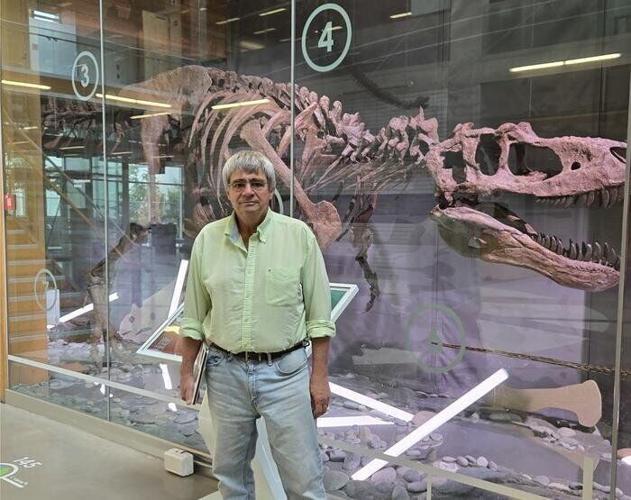
Dr. Philippe Claeys, a visiting professor at the University of British Columbia, in front of an exhibit at the Pacific Museum of Earth. (University of British Columbia via SWNS)
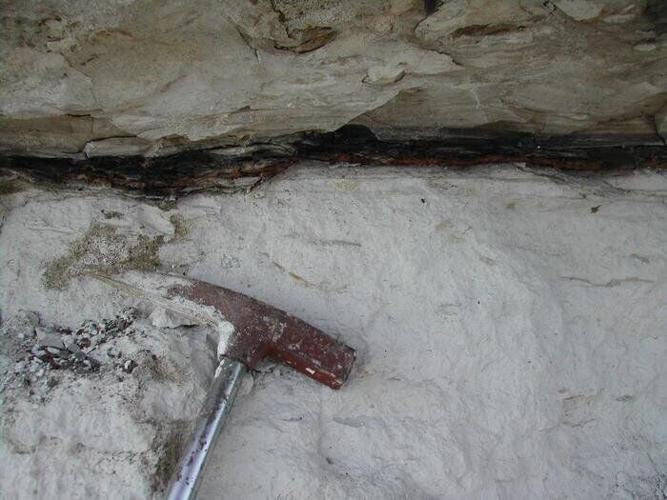
Residue of the Cretaceous-Paleogene impact. Dark clay-rich KT boundary layer in Stevn’s Klint, Denmark used in the study. (Dr. Philippe Claeys via SWNS)
Dr. Philippe Claeys, a visiting professor at the University of British Columbia, in front of an exhibit at the Pacific Museum of Earth. (University of British Columbia via SWNS)
By Stephen Beech
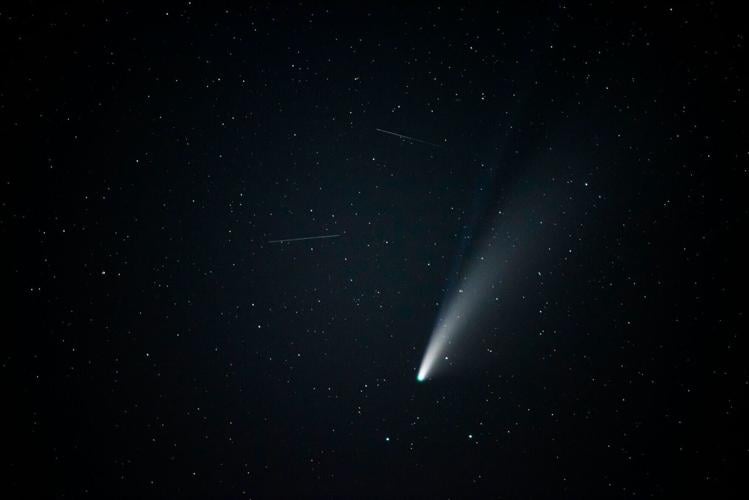
Dinosaurs were unlucky to be wiped out by an "oddball" meteorite 66 million years ago, say scientists.
Residue of the Cretaceous-Paleogene impact. Dark clay-rich KT boundary layer in Stevn’s Klint, Denmark used in the study. (Dr. Philippe Claeys via SWNS)
Keep it Clean. Please avoid obscene, vulgar, lewd,
racist or sexually-oriented language. PLEASE TURN OFF YOUR CAPS LOCK. Don't Threaten. Threats of harming another
person will not be tolerated. Be Truthful. Don't knowingly lie about anyone
or anything. Be Nice. No racism, sexism or any sort of -ism
that is degrading to another person. Be Proactive. Use the 'Report' link on
each comment to let us know of abusive posts. Share with Us. We'd love to hear eyewitness
accounts, the history behind an article.







(0) comments
Welcome to the discussion.
Log In
Keep it Clean. Please avoid obscene, vulgar, lewd, racist or sexually-oriented language.
PLEASE TURN OFF YOUR CAPS LOCK.
Don't Threaten. Threats of harming another person will not be tolerated.
Be Truthful. Don't knowingly lie about anyone or anything.
Be Nice. No racism, sexism or any sort of -ism that is degrading to another person.
Be Proactive. Use the 'Report' link on each comment to let us know of abusive posts.
Share with Us. We'd love to hear eyewitness accounts, the history behind an article.