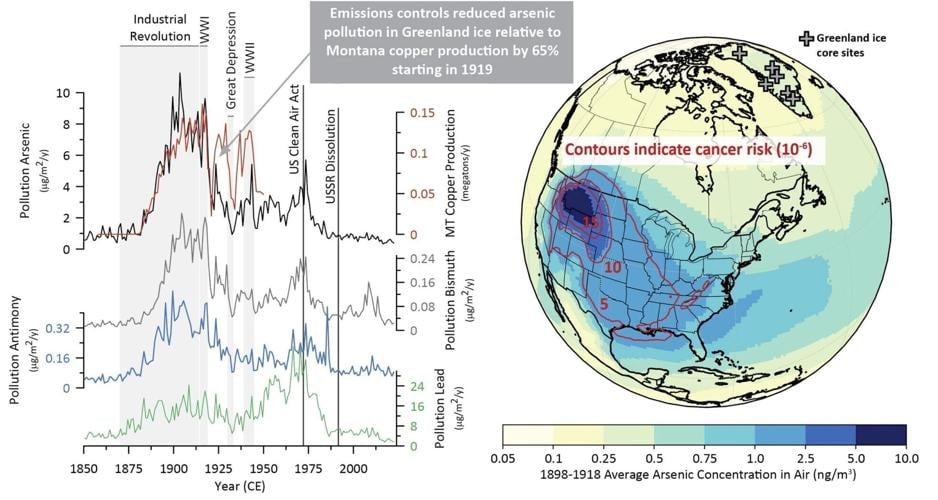
Left: A graph showing the rise and fall of arsenic, antimony, lead, and bismuth levels recorded in Arctic ice cores between 1850 and 2015. The red line shows copper production at the Anaconda Copper Mine. Although declines were delayed by nearly a decade due to lax government regulations, arsenic pollution was greatly reduced by the 1919-1923 phased installation of pollution controls. Right: An atmospheric circulation model demonstrating the spread of Anaconda MineÂs air pollution across North America and potential health implications. (DRI via SWNS)
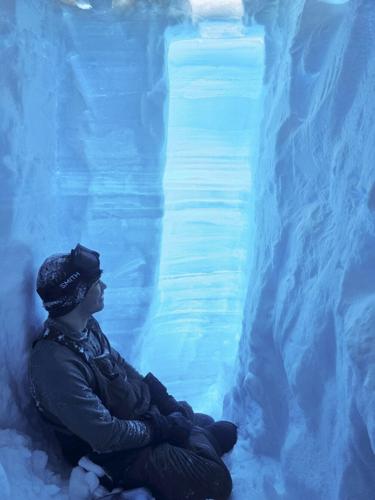
Researcher Derek Pickell admiring a backlit snowpit showing the layers of snow that compress into the Greenland ice sheet. These layers, which build up year after year and can be read back in time like tree rings, provide valuable information about past environmental processes such pollution, volcanism, and forest fires. (Nathan Chellman via SWNS)
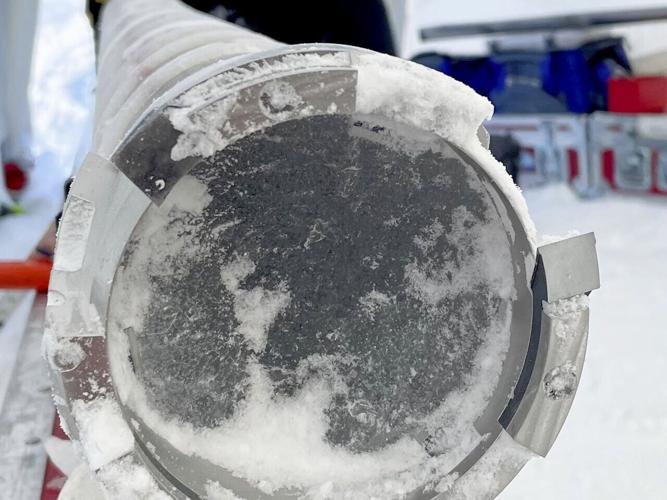
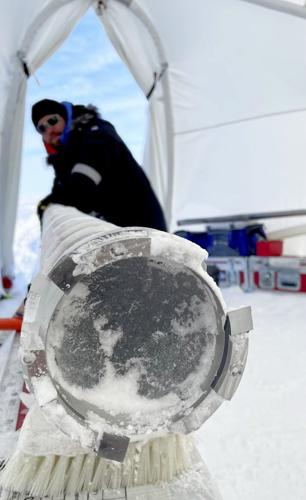
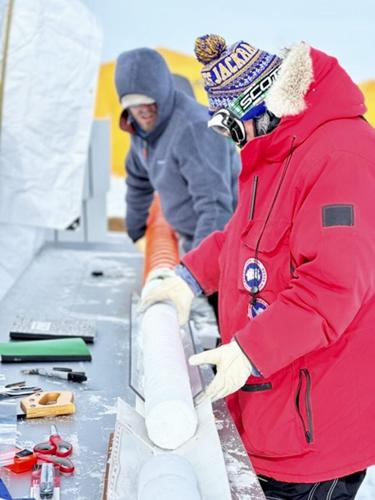
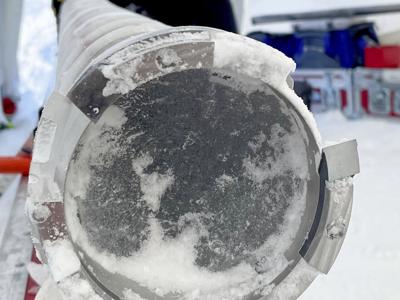
Study co-author Nathan Chellman and Jihong Cole-Dai (South Dakota State University) process a freshly drilled ice core during a Greenland expedition near Summit Station. (Derek Pickell via SWNS)
Keep it Clean. Please avoid obscene, vulgar, lewd,
racist or sexually-oriented language. PLEASE TURN OFF YOUR CAPS LOCK. Don't Threaten. Threats of harming another
person will not be tolerated. Be Truthful. Don't knowingly lie about anyone
or anything. Be Nice. No racism, sexism or any sort of -ism
that is degrading to another person. Be Proactive. Use the 'Report' link on
each comment to let us know of abusive posts. Share with Us. We'd love to hear eyewitness
accounts, the history behind an article.






(0) comments
Welcome to the discussion.
Log In
Keep it Clean. Please avoid obscene, vulgar, lewd, racist or sexually-oriented language.
PLEASE TURN OFF YOUR CAPS LOCK.
Don't Threaten. Threats of harming another person will not be tolerated.
Be Truthful. Don't knowingly lie about anyone or anything.
Be Nice. No racism, sexism or any sort of -ism that is degrading to another person.
Be Proactive. Use the 'Report' link on each comment to let us know of abusive posts.
Share with Us. We'd love to hear eyewitness accounts, the history behind an article.