DURHAM – With more than 81 percent of New Hampshire represented by forested lands home to more than 500 vertebrate animals, the Granite State's wildlife populations are important to the ecological, recreational, and economic sustainability of the state. Managing and conserving New Hampshire’s wildlife species requires robust data on where they are located and the size of their populations. However, this information often is challenging to obtain as many wildlife species are difficult to monitor, and populations fluctuate from year to year.
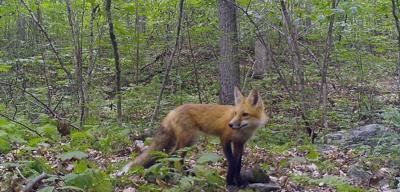
As a result, researchers with the New Hampshire Agricultural Experiment Station at the UNH College of Life Science and Agriculture, in cooperation with the New Hampshire Fish and Game Department, are developing a unique monitoring system for wildlife in the Granite State to help inform management and conservation decisions.
Keep it Clean. Please avoid obscene, vulgar, lewd,
racist or sexually-oriented language. PLEASE TURN OFF YOUR CAPS LOCK. Don't Threaten. Threats of harming another
person will not be tolerated. Be Truthful. Don't knowingly lie about anyone
or anything. Be Nice. No racism, sexism or any sort of -ism
that is degrading to another person. Be Proactive. Use the 'Report' link on
each comment to let us know of abusive posts. Share with Us. We'd love to hear eyewitness
accounts, the history behind an article.








(0) comments
Welcome to the discussion.
Log In
Keep it Clean. Please avoid obscene, vulgar, lewd, racist or sexually-oriented language.
PLEASE TURN OFF YOUR CAPS LOCK.
Don't Threaten. Threats of harming another person will not be tolerated.
Be Truthful. Don't knowingly lie about anyone or anything.
Be Nice. No racism, sexism or any sort of -ism that is degrading to another person.
Be Proactive. Use the 'Report' link on each comment to let us know of abusive posts.
Share with Us. We'd love to hear eyewitness accounts, the history behind an article.