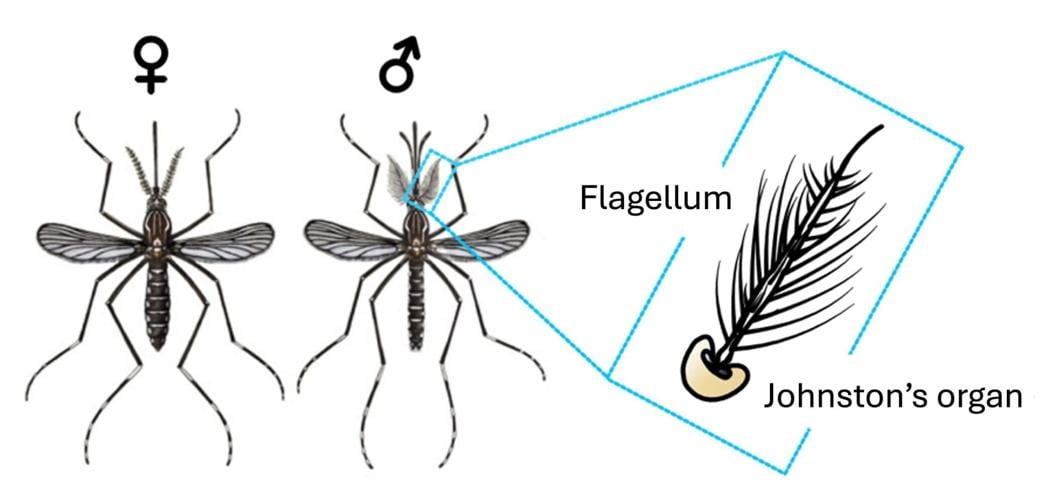
Like our eardrum, the flagellum receives sound and vibrates. These vibrations are transmitted to the Johnston's organ at the base of the antenna, activating the neurons within it. (WPI-ITbM via SWNS)
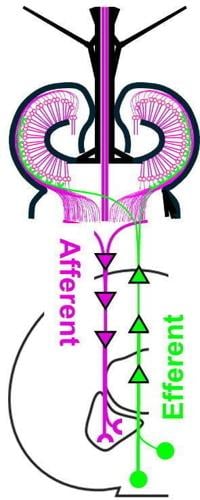
Visualization of the afferent and efferent neuron networks in mosquitoes. Graphic adapted from the original study published in PLOS Biology. (Loh et al., PLOS Biology (2026) via SWNS)
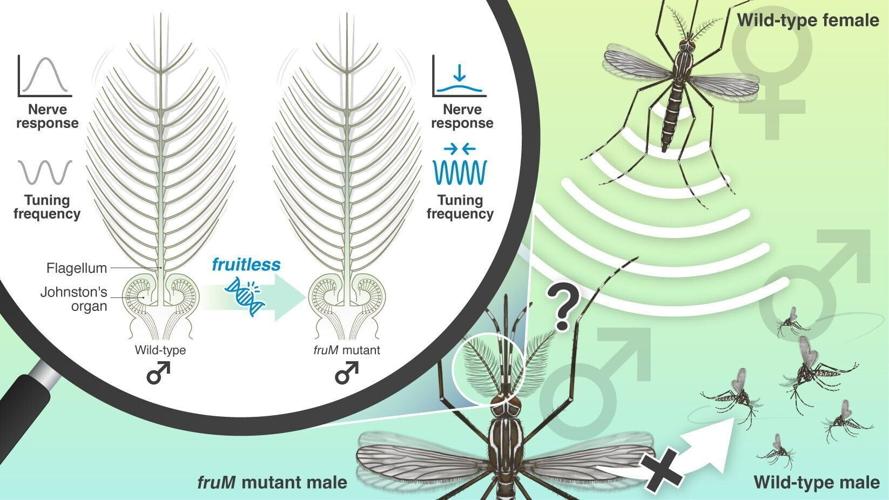
The fruitless gene in mosquitoes engenders attributes necessary for males to locate females by listening for their wingbeat sound. Mutating this gene in males impairs their hearing and their ability to locate and mate with females. (Yoko Sasayama via SWNS)
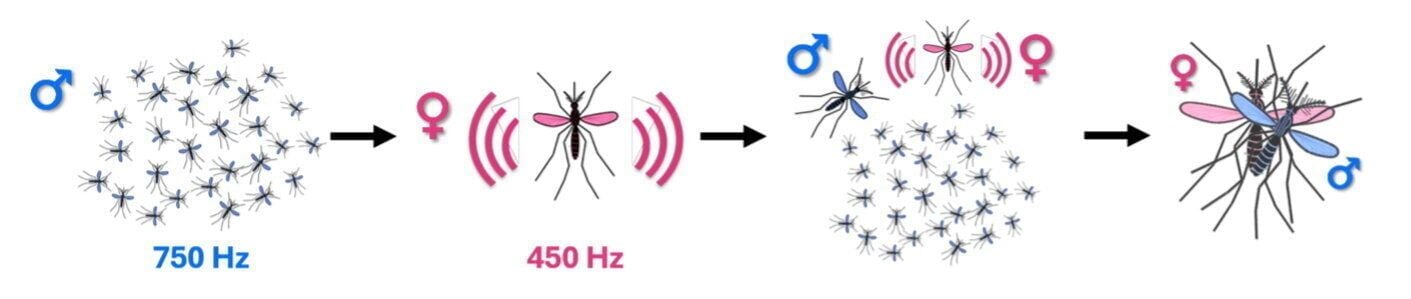
Male mosquitoes form swarms and wait for females to arrive. When a female approaches, males detect her wingbeat sounds, approach and court her, then ultimately mate with her. Wingbeat frequencies differ between males and females: approximately 750 Hz in male Aedes aegypti and 450 Hz in females. Graphic adapted from the original study published in PLOS Biology. (Loh et al., PLOS Biology (2026) via SWNS)
Keep it Clean. Please avoid obscene, vulgar, lewd,
racist or sexually-oriented language. PLEASE TURN OFF YOUR CAPS LOCK. Don't Threaten. Threats of harming another
person will not be tolerated. Be Truthful. Don't knowingly lie about anyone
or anything. Be Nice. No racism, sexism or any sort of -ism
that is degrading to another person. Be Proactive. Use the 'Report' link on
each comment to let us know of abusive posts. Share with Us. We'd love to hear eyewitness
accounts, the history behind an article.









(0) comments
Welcome to the discussion.
Log In
Keep it Clean. Please avoid obscene, vulgar, lewd, racist or sexually-oriented language.
PLEASE TURN OFF YOUR CAPS LOCK.
Don't Threaten. Threats of harming another person will not be tolerated.
Be Truthful. Don't knowingly lie about anyone or anything.
Be Nice. No racism, sexism or any sort of -ism that is degrading to another person.
Be Proactive. Use the 'Report' link on each comment to let us know of abusive posts.
Share with Us. We'd love to hear eyewitness accounts, the history behind an article.