

The nebula lies 6,500 light-years away in Taurus and was first seen in 1054.
From
To

Researchers said this event, called GRB 230906A, is likely in a stream of gas located about 4.7 billion light-years from Earth.

Turbulent plasma near distant stars could blur ultra-narrow signals before they leave their home star systems - making them difficult to detect.
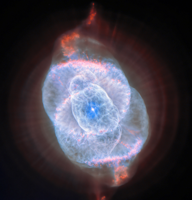
The image features one of the most visually intricate remnants of a dying star: the Cat’s Eye Nebula, also known as NGC 6543.
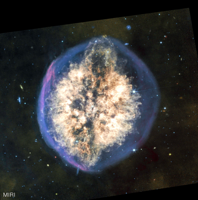
"Nebula PMR 1 is a cloud of gas and dust that bears an uncanny resemblance to a brain in a transparent skull."

NASA’s Chandra X-ray Observatory caught the bubble – called an “astrosphere” – surrounding the juvenile star.

The Hubble Space Telescope has revealed a dramatic interplay of light and shadow in what's called the Egg Nebula.

First spotted in the early 1800s, the celestial object has become one of the most iconic planetary nebulae in the sky, often referred to as the “Eye of God.”

The scenes track the furious expansion of Kepler’s Supernova Remnant, the glowing remains of a star first spotted in 1604 by the German astronomer Johannes Kepler.

For decades, astronomers have tracked changes in its brightness and surface features in hopes of figuring out why the star behaves the way it does.